

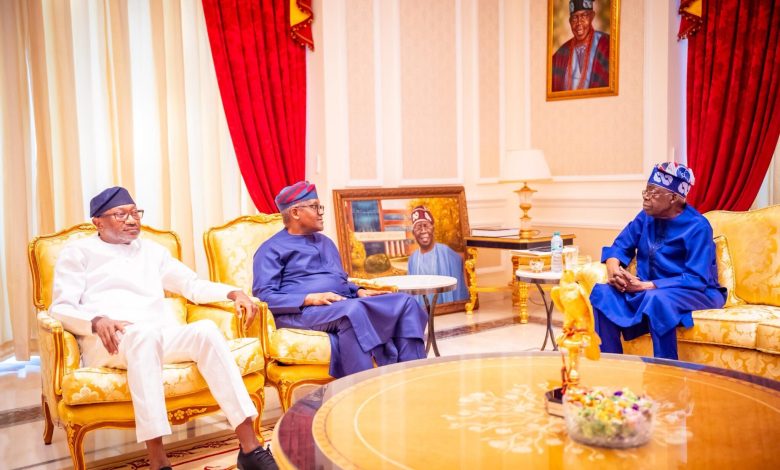
The President of the Dangote Group, Aliko Dangote, has disclosed that the group rejected requests by the Nigerian National Petroleum Company Limited (NNPCL) to increase its 7.25 per cent stake in the Dangote Petroleum Refinery.
In 2021, the NNPC acquired the 7.25 per cent stake in the refinery for $1bn, with an option to acquire the remaining 12.75 per cent stake by June 2024. But the national oil firm reneged on its decision.
Speaking in an interview with the Chief Executive Officer of the Norwegian Sovereign Wealth Fund, Nicolai Tangen, Dangote revealed that the national oil company had attempted to acquire additional stakes in the refinery, but the attempt was rejected.
He explained that the NNPC’s offer to increase its 7.25 per cent stake in the refinery was rejected because the company is planning to go public and give other Nigerians the opportunity to own shares in the plant.
Responding to questions about what could be the biggest risks to his businesses, Dangote mentioned civil war and government policy inconsistencies, saying, “Actually, if there are civil wars, which is not in the offing at all.
“The other biggest risk is government inconsistencies in policies, and we are addressing that one because if you look at our refinery, the national oil company already owns 7.25 per cent, and they are trying to buy more. We are the ones that said no; we want to now spread it and have everybody be part of it.”
Speaking further, the billionaire businessman said shareholders can get their dividends in dollars.
“What we are announcing is that when you invest in any of our businesses going forward, in cement or in the refinery, in petrochemicals, in fertiliser, we guarantee to pay you a dividend in dollars because we are very well into exports. 80 per cent of our revenue will be in dollars,” he said.
To raise funds for building the refinery, Dangote said he got a lot of support from various financial institutions, including Nigerian banks
According to him, the initial plan was to fund most of the construction work “from our internally generated funds”, but because of naira devaluation, the group “had to rely on Afreximbank, Africa Finance Corporation, Zenith Bank, Access Bank, UBA and a couple of the local banks, but of course we also have a very good relationship with the Standard Bank of South Africa and, at the beginning, Standard Chartered Bank of the UK”.
He maintained that the company was lucky and what happened when the plant was completed “turned out to be much more than our own expectations”.
“When I decided to go into the industry, you know what I did? I sold all my properties in the US. I had two houses in the US, big mansions, and I had a house in the UK. I wanted to really sit in Nigeria and concentrate.
“You know, sometimes when you own a holiday home anywhere, you have to create that time to go and use that property. So, now my life is very simple. Wherever I go, I use hotels; I pay. When I leave, nobody will call me and say I have a burst pipe or something is wrong. So I’m committed to what I do, and I just don’t do things; I always create a vision.
“It’s just like now; we created a vision for 2030. So, I know I have a target to meet. I just don’t do business. All my businesses are targeted,” he said.
On how he decides which business to venture into, the business mogul replied, “I first of all look at what we need as a people? What is it that we are supposed to be producing, and we’re importing? So we do what you call ‘backward integration’. We produce what the people need, and we are now producing things that when you wake up as a human being every morning, you must use part of what we produce.”
