


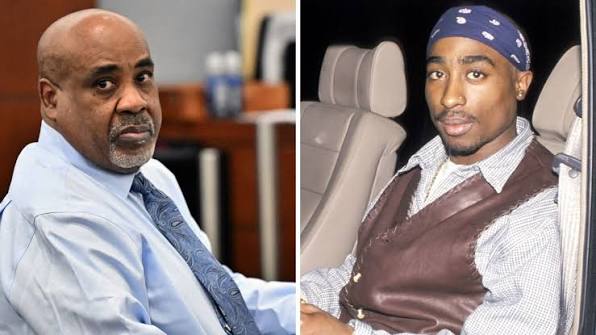
The jury convicted Davis on one count of first-degree murder with use of a deadly weapon on Monday, Aug. 31, after less than three hours of deliberations. Davis is the only person charged in the hip hop legend’s death and faces life in prison.
USA TODAY reached out to Davis’ attorney Michael Sanft for comment.
During the two-week trial, prosecutors presented evidence that Davis provided the gun and instructed members of the South Side Compton Crips street gang, which he was allegedly a leader of, to shoot Shakur in Las Vegas on the night of Sept. 7, 1996.
In the prosecution’s opening statement, Chief Deputy District Attorney Binu Palal called the crime an act of “gang retaliation and revenge.” The murder charge initially carried a potential gang enhancement, but after the verdict, prosecutors announced they would not pursue it due to “witness logistics.”
Davis will be sentenced on Oct. 13.
What happened the night Tupac Shakur was shot?
At the time, the rapper was signed to Marion “Suge” Knight’s Death Row Records, which was associated with the Bloods gang, while Davis was a leader of the rivaling South Side Crips. Prosecutors believe Davis called for the shots as an act of retaliation after Shakur and Knight beat up Davis’ nephew, also a Crips member, earlier that night.
Knight, who is currently serving a 28-year prison sentence in California for a fatal hit-and-run in 2015, was also shot but survived. Shakur died from his injuries six days later.
When former Las Vegas Metropolitan Police Officer Greg Dale, who rode in the ambulance to the hospital with Shakur, testified last week, he said the music icon refused to identify any suspects.
“No, we’ll take care of it,” Dale testified were Shakur’s final words.
Death Row also had ongoing tensions with Sean “Diddy” Combs’ Bad Boy Records, a rivalry prosecutors said became intertwined with tensions between the Bloods and Crips. Prosecutors said Knight employed members of the Bloods-affiliated Mob Piru as security for his label, while Combs hired Davis as “unofficial security” for him and his Bad Boy artists when they were on the West Coast.
Former Bloods member James McDonald and former Death Row security chief Reggie Wright Jr. testified about those security arrangements and said they were in Las Vegas the night Shakur was shot because of tensions with Bad Boy. Former Crips member Denvonta Lee also testified that he spent time with Combs and Bad Boy associates in the ’90s, when Davis was “known for hustling.”
Keffe D’s own words became key evidence at trial
Decades passed before Davis was indicted in 2023, four years after the release of a memoir he co-wrote, titled “Compton Street Legend: Notorious Keffe D’s Street-Level Accounts of Tupac and Biggie Murders, Death Row Origins, Suge Knight, Puffy Combs, and Crooked Cops.” In it, Davis admitted to being in the car and providing the weapon used to shoot Shakur.
“Had Mr. Davis never opened his mouth, never written the book, he would probably not have been prosecuted for the crime,” prosecutors said during a trial readiness hearing in June.
Throughout the trial, prosecutors pointed to the book, along with police interviews from 2008 and 2009 in which Davis admitted his involvement, as evidence of his guilt. The defense argued that Davis had lied about his involvement and characterized the evidence against him as “incomplete.”
Davis’ admissions remained at the center of the prosecution’s case.
“The one thing [Davis] never says from 1998 to 2023 is, ‘I wasn’t there,'” Palal said in his closing argument.
Clark County District Attorney Marc DiGiacomo added: “Mr. Davis is attempting to escape responsibility for a crime everybody knows he committed, even him, and he admits to it.”
