

Labour leaders and pro-democracy activists have called on Nigerians to unite against rising petrol prices and worsening economic hardship, accusing the Federal Government of implementing policies that impoverish workers and the masses while enriching a privileged few.
They warned that rising pump prices of Premium Motor Spirit (PMS), popularly known as petrol, had eroded workers’ purchasing power, deepened poverty and pushed millions of Nigerians into a daily struggle for survival.
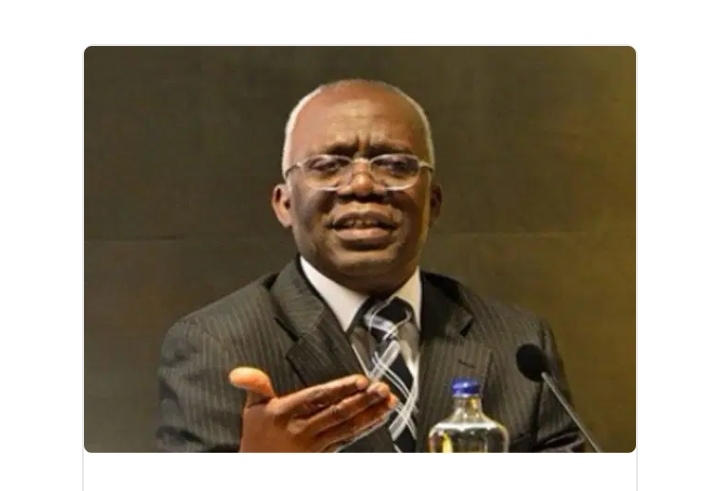
The activists, including the Nigeria Labour Congress (NLC), human rights lawyer, Femi Falana, SAN, and members of the Joint Action Front (JAF), made the call at the weekend in Lagos during a symposium held as part of the first memorial celebration in honour of Comrade Abiodun Aremu.
NLC President, Joe Ajaero, represented by the union’s Acting General Secretary, Benson Upah, said the removal of the petrol subsidy had inflicted devastating consequences on workers and the wider population, insisting that organised labour would continue to demand relief from the Federal Government.
In an address delivered on his behalf, Ajaero described the prevailing economic situation as a crisis of survival, arguing that workers could no longer cope with rising transport fares, food prices, electricity tariffs and the depreciation of the naira
”The removal of the fuel subsidy has devastated Nigeria’s working class and masses,” the address stated.
According to the NLC, rising transport costs have forced many workers to choose between paying exorbitant fares and walking long distances to their workplaces.
The union also cited increases in the prices of essential commodities, noting that a bag of rice that previously sold for about ₦30,000 now costs more than ₦80,000, while the price of a loaf of bread has risen from approximately ₦500 to ₦1,500.
It further argued that rising electricity tariffs had forced some small businesses to shut down, while the depreciation of the naira had increased the cost of imported medicines, industrial inputs and other essential goods.
The labour movement attributed the worsening conditions to what it described as anti-people economic policies implemented without adequate consultation or effective measures to cushion their impact
“The government has effectively declared war on its own people, pushing the majority to the fringes of survival,” the address declared.
The NLC said the crisis reflected economic policies that, in its view, enriched the ruling class while deepening the hardship experienced by ordinary citizens
The NLC disclosed that it issued a two-week ultimatum to the Federal Government on October 9, demanding an immediate reduction in petrol prices.
According to the address, the ultimatum was intended to compel the government to address the growing disconnect between workers’ earnings and the cost of living.
Ajaero said: “Most recently, the NLC issued a two-week ultimatum to the Federal Government, demanding an immediate reduction in the price of Premium Motor Spirit (PMS), also known as petrol
This ultimatum is not a mere bargaining chip but a solemn warning. If the government does not act within the stipulated timeframe, the NLC will have no choice but to seek remedial steps with all of us in this hall today.”
He argued that petrol prices should be reduced to a level consistent with the purchasing power of workers earning the national minimum wage of ₦70,000 monthly
The NLC recalled that when the minimum wage was set at ₦70,000 in July 2024, petrol sold for approximately ₦668.30 per litre, compared with prices exceeding ₦1,400 per litre in many parts of the country at the time of the symposium
A worker earning ₦70,000 a month cannot afford to buy petrol at ₦1,400 per litre. The government has effectively rendered the minimum wage meaningless.
“The ₦70,000 minimum wage was inadequate when it was announced. It is now a cruel joke. The NLC will not accept a situation where Nigerian workers are expected to survive on starvation wages while the cost of living continues to rise,” Ajaero declared.
Beyond demanding a reduction in petrol prices, the NLC urged the government to take concrete measures to stabilise the naira, reduce inflation and strengthen domestic refining capacity.
“The removal of the subsidy was justified on the grounds that it would attract investment in local refining. Where is that investment
