

Ahead of the 2027 general election, the credibility of the Independent National Electoral Commission, INEC, voters’ register has come under scrutiny.
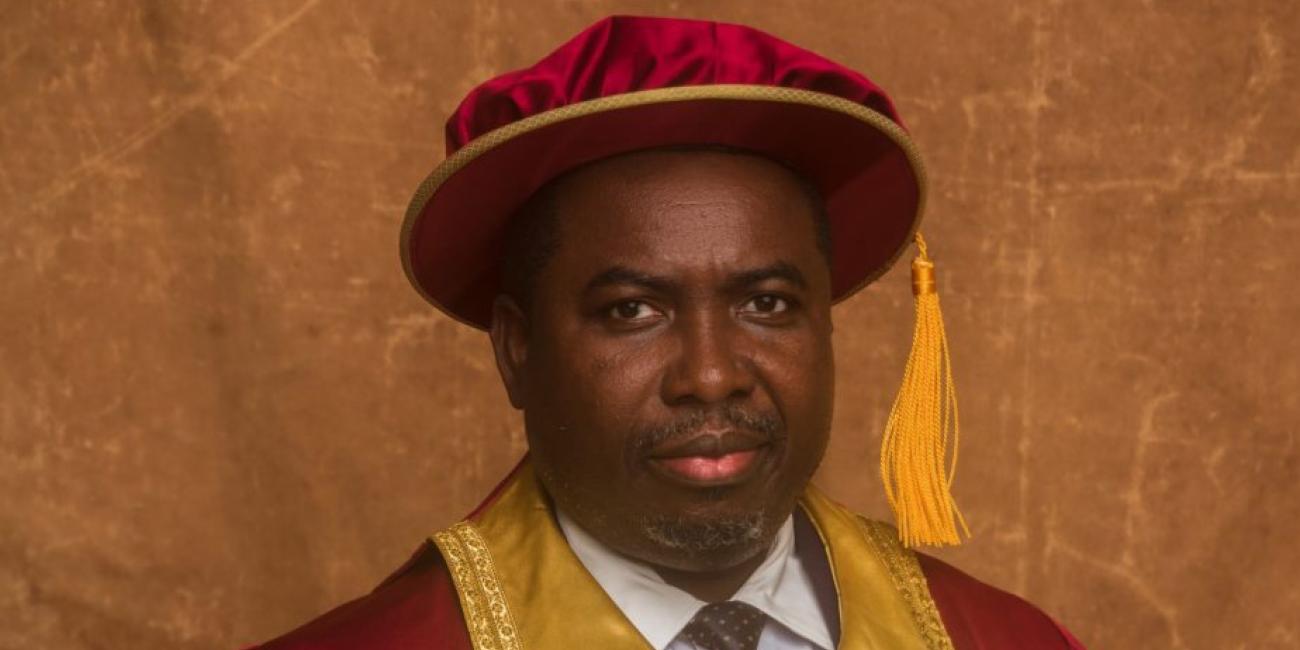
CityNews reports that this is following the recent revelation by the INEC chairman, Professor Joash Amupitan that names of the many dead persons were still in the register.
Amupitan had revealed that names of voters who had died as far back as 15 years ago were still in the country’s voter register, a development many argue would not only question the credibility of the 2027 election outcomes but also cause unnecessary financial waste in terms of printing ballot papers and providing other logistics for the exercise.
This was revealed when the INEC boss received Director-General/Chief Executive Officer of the National Identity Management Commission (NIMC) Abisoye Coker-Odusote and her management team who visited him in Abuja on Wednesday.
According to Amupitan, INEC has already entered into partnership with NIMC to ensure a credible voters register and transparent elections in next year’s polls.
He noted that INEC would leverage NIMC’s data architecture to progressively clean up the register.
He explained that a credible, well-quantified voter register would significantly reduce the overall cost of conducting elections, noting that INEC currently has to print materials in excess of the over 100 million entries on its register to accommodate discrepancies.
He stressed that the newly signed NIMC Act 2026 lays the foundation for a new electoral system in Nigeria built on verified identity and stronger data integrity, expressing confidence that with NIMC’s database now covering more than 136 million enrolled Nigerians, deeper cross-platform integration between the two commissions would allow for continuous auditing, verification and elimination of duplicate or underage entries on the voter register.
“Also, the INEC’s newly introduced online voter registration platform is deliberately anchored on the National Identification Number (NIN) as a verification protocol, a critical step toward a more seamless Continuous Voter Registration (CVR) process,” he said.
Apart from the financial implications of such a questionable register, the INEC chairman was candid about the identity-related challenges, saying that voter identity could easily be stolen, easily impersonated and easily duplicated.
The NIMC boss, Coker-Odusote also assured that identity remains the foundation of effective governance and credible election planning, pledging NIMC’s full support to INEC in delivering a fair and transparent 2027 general elections.
The INEC chairman’s revelation was just a confirmation of the fear being expressed by many Nigerians.
A university lecturer, Dr Samuel Adegboye, believes that having dead persons’ names on the voter register aids election manipulations.
He also believes that sometimes, it is deliberate, noting that, “some corrupt INEC officials are working in cahoots with some dubious politicians to ensure that election manipulation is made possible.
“With the names of dead persons in the voter register, it becomes very easy for politicians to inflate figures at the end of the day. And as I said, such politicians work in cahoots with some INEC officials.
“However, the INEC chairman did not tell us the number of dead persons in the register. The numbers could be in the hundreds of thousands considering the number of unnatural deaths that had occurred in Nigeria over the past 10 years as a result of insecurity across the country.”
“So, I commend him for being honest to accept that there are dead persons whose names are still in the voter register. Let it not just end in rhetoric, let him back it up with action as he has promised. Such dead persons’ names should be weeded out of the register.
“That way, rigging will be maximally reduced and we can expect an improved election outcome,” he told DAILY POST.
He advocated that apart from dead names, the issue of ghost voters must also be tackled.
He noted that there are hundreds of thousands of non-existent names in the voter register, stressing that since the INEC chairman has started with the dead voters, he should also go a step further to tackle the issue of ghost voters.
“You know, it has become a popular cliche that anything is possible in Nigeria. This is a country where the absurd has become the norm. It started with ghost workers in the civil service where some dubious officials collect salaries for non-existent personnel.
“And this went on for so many years before it was discovered and since its discovery, that problem has kept recurring in the civil service.
“Recently, we are talking about a ghost agency that has existed for over three years. Can you imagine that? An agency that has been submitting budgets and getting approval for three is what they are telling us doesn’t exist?
“If that can happen, what makes you think that we can’t have ghost voters? So, since the INEC chairman has decided to be honest enough to admit that there are dead persons’ names in the voter register, I want him to also know that there are ghost voter names in that register.
“Let him address both issues at the same time so that we can have fair and credible election results in 2027,” he added.
Also, speaking on the matter, a retired civil servant, Johnson Adewale stressed that apart from curtailing rigging and restoring credibility to the electoral process, such a clean-up will save enough funds.
“As the INEC chairman has pointed out, removing dead names from the voter register will help prevent printing ballot papers that will end up in waste-bins. For instance, what use will it be to print 10 million voter’s cards when the actual number of voters is five million? It doesn’t make sense. It amounts to a waste of materials and
money.
“Secondly, when the INEC is working with wrong data, it is bound to make avoidable mistakes.
“Politicians can easily inflate figures once they have INEC officials that can play balls and it will be difficult to detect because the number in the voter register will seem to align even when most names in the register belong to dead persons.
“So, it is good news to hear that INEC will collaborate with NIMC to clean up the voter register and ensure that dead persons’ names are removed. It will go a long way to ensuring credibility of the electoral outcome.
“I am not saying it will automatically prevent rigging but it will reduce election malfeasance and improve fairness in the process.
“It will also save funds and reduce stress on the part of INEC officials,” he said.
For a former local government counsellor in Amuwo Odofin Local Government Area of Lagos State, Kolade Adegboyega, “Nigerians are tired of rhetoric; they want action.”
He agrees with the INEC chairman that such a move would reduce the overall cost of election in Nigeria.
He commended the INEC chairman’s openness and resolve to tackle the menace once and for all by seeking collaboration with NIMC.
He, however, advised the INEC boss to do everything within his power to ensure that Nigerians have credible elections in 2027.
“The INEC chairman should do everything possible to remove all bottlenecks that could taint the outcome of the 2027 elections.
“His move to collaborate with NIMC to clean up the voter register is a welcome development because once you don’t have a credible register, the credibility of the entire process becomes questionable.
“So, he should be encouraged as he embarks on such a clean-up exercise,” he submitted.
Also, speaking, a lawyer and public affairs commentator, Jason Osazuwa decried the development, saying, “if not that the entire system is already corrupt, how can such a thing happen?
“We all know that Nigeria has a big problem with keeping data and that’s why we have ghost workers in the civil service everywhere.
“It is shameful that at this age and time, we are talking about having names of dead persons in our voter register.
“I only want the INEC boss to live up to his words. Let him partner with NIMC to clean the register. We want to have fair, credible elections in 2027 and beyond.”
